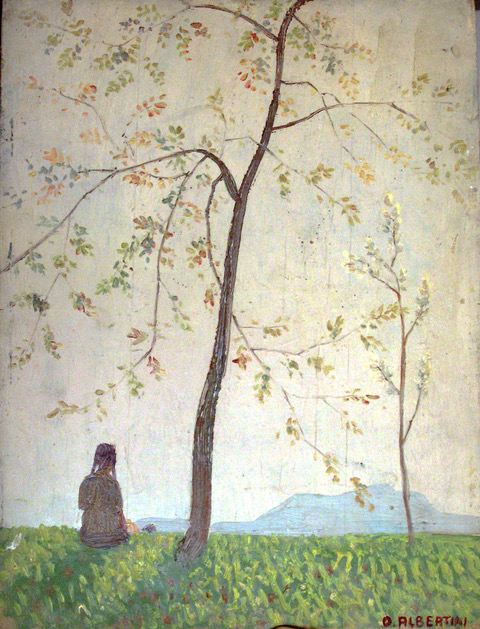
C H A O S
BY ROSANNA ALBERTINI
Thick like a rock, the mountain of smoke was surging from the horizon in front of my house. The sky, a luminous stripe of light blue, was squeezed between the new soft, dark mountains and the umbrella of gray interrupting the usual sense of infinity. Fire was underneath all that, invisible.
The beginning of something new. A few days ago a sudden disaster exploded in the city of angels, building walls of fire among the hills, pushing flames down the hills to the line of the ocean, jumping like hungry dragons devouring houses and trees. I avoid the political litany of complaints. News have been accurate, brave, sometimes more than news, personal stories impossible to watch without tears. Thank you Katy Tur! As I’m reading The city and its uncertain walls by Haruki Murakami, I’m tempted to compare the wild surging of fires like red walls, appearing at the same time in distant part of the city, to the walls in the book, that move and follow people who live there, to block them from getting out. In the literary dream humans can go through the wall only closing their eyes and giving up fears. You can say reality is different… not really. Beyond the physical destruction opens up a large buffer space, the emotional arena.
So many left outside, standing in the chaos, deprived of the space where their whole life had been contained. An undefinable sense of disillusion, fears bigger than this disaster, turn on the way to darkness and tameness, deeply invading brain and body of those as well who did not meet the flames in person.
I can’t speak for others, I was facing for the first time the natural power of fire and wind in full force, a primordial work hard to defeat. I was not really prepared. And even less was I expecting that wind and fire would have sucked out from my chest most of the vague terrors, painful memories and illusions -a cumulative weight growing along my whole life- that I had kept quietly invisible inside, as if my reason could regulate life despite them. The personal color of all of that faded. Their weight deflated.
Roughly grabbed out, the personal inner chaos was materialized in front of me, reduced to ashes, broken down, meaningless. When it’s hidden god knows where in my body, do the cells reserve a corner to such spidery connections? In fact, connections change over the years, flashes of memory change every time I put words on them, I see myself at five painting my face with the rotten husk of the walnuts fallen from the tree, darker than ink.
Do the birds fly holding a small chaos inside, or are they completely programmed, or else they are both, with inner conflicts like us? They memorize.
Day 9 For the first time various bird voices jump from one to another tree, seasons keep happening, and little by little we rebuild everything like spiders, also the inner chaos.

As I was boiling in my brain these fragments of thoughts, I received from Jean-Louis Garnell, a French artist whose voice becomes very powerful the more it is filtered by solitude and questioning, the image of a drawing. Man Facing the Chaos, 2025. The state of mind he depicts comes from France, and yet is the same we share in California through the series of disasters happening in these days. No edges, no protections, each human is part of a formless transformation of matter and ideas, that are only sparkles of matter.
No distance between inside and outside. Fluid, undefined, we become marks on paper beyond words, boux de ficelle, blades of grass, dry flowers, cotton treads. I know, it’s absurd to write about shapeless things using names of things. That’s how reality is pinned down. A drawing, Garnell’s drawing, reveals fragility as well as persistence. We are absurd, we don’t give up.
Day 2. When I was born, burned and broken walls in Milan after the bombs of WW2 were still smoking. Probably my cells more than my mind have a precise memory of me. I could start now a new life, as it happened then, once more not by my decision. I am a dresser opening drawers here and there with no chronological order, no order at all.
A landscape of ruins has transformed big parts of Los Angeles into a B&W crumbling drawing. I try to feel like my friends who lost the comfortable, friendly objects, the furniture of their lives. Maybe inside them too the fire burned down fears and resentments. I believe they will do the same my friend John Pule did, building inside a trunk of wood, “a statue carved by the effort of finding solitude and voice beyond survival.”
So many of them are artists. I wish their voices will sit in the air after the end of smoke, inspiring everybody else’s efforts. It is not Artificial Intelligence that will help resilience. A deep sense of equality as humans, just human intelligence, that would be enough.
Our questions should evolve like everything else in life. A city, especially Los Angeles so rich with languages, habits, food from all of the world, is not different from a country. Who decides the edges? Who decides whose country the country is? The will of the few? The will of the many? A country is a dinner at the same table, as large as the fish can be. Not one person is better than another, actions are not precisely measurable. Agreements are questionable and there is no evil in arguments, only differences. We share “a secret rising and ebbing of our being with that of things and of other people.” (Robert Musil)
Instead of “whose country” I would like to ask: “Who is coming for dinner?”

BIBLIOGRAPHY
Rosanna Albertini, New Zealand with an Italian Accent, Oreste & Co. Publishers, Los Angeles, 2010
Robert Musil, Precision and Soul, The University of Chicago Press, 1990
Haruki Murakami, The City and its Uncertain Walls, 2024
You must be logged in to post a comment.