ROMA and FONO ROMA 2 – early 1950s again

by ALBERTO ALBERTINI, Milano 2016

The Lollobrigida case, how dubbing in Italy changed forever, and how Alberto reacted to a not very exciting job with inventive resources, becoming an inventor within the film industry.

ALBERTO ALBERTINI, Coordinare - Coordinating

Alberto Albertini, COORDINARE – COORDINATING

Dubbing was introduced by the American film industry wanting to sell  movies abroad. The FONO ROMA had a fortuitous birth: an American producer meeting a former singer, I believe Mister Persichetti, to open dubbing studios in Italy.

Dubbing consists of repeating in Italian the foreign actors’ voice and combining the new voice with the other film sounds and music. Italian movies did not need dubbing because actors were recorded live during filming.

But, lack of money after the war and the use of non-professional actors led to the practice of dubbing the Italian movies as well, either because the live recording was expensive or because the actors were not able to speak a correct Italian. Later live recording was imposed by law, in order to protect the workers in the audio department, but the employment of non-professional actors continued. Hence the practice of audio recording to be used only as a guide for the dubbers in the final editing. Sound recording, when it is GOOD, brings additional costs not only for people and tools, but also for control of surrounding conditions such as silence in the room. Also the audio recording had to be good. Now direct recording is easier, having cheaper, and technologically more advanced devices.

O R G A N I Z Z A R E – O R G A N I Z I N G

r-aa-organizzare-159

r-aa-organizzare-160


r-aa-organizzare-161

What I’m saying is that, before I became a mixer, I happened to record dubbing sessions for both, Italian and foreign movies.

Allora?  Three fundamental episodes came out of all that:

The job was boring. Between the testing of a loop and the recording I often fell asleep, especially during the summer at two in the afternoon. There was a day in which somebody from the recording room (I was in the mixing booth) asked me: is it OK? Yes. OK or not? You don’t sound very convinced. I got it, the answer was important. Since then I always answered Yes!!! an experience that became precious later on.

Some of the actresses refused to be dubbed and required us to let them dub themselves: The Gina Lollobrigida case. Beyond the poor quality of her acting, she had an awful voice ending in a dead sound at the end of each word. I used to raise all the final syllables to make her words comprehensible. The point is that Guglielmo Morandi, the dubbing director, wanted to extract blood from a turnip and she, at a certain moment, wasn’t able to give what the director wanted. We were stuck. From the mixing booth using the intercom I said: let’s stop for a little while, so she can rest and then we restart… Furious, Morandi shouted at me: how did I dare to interfere with the director etcetera, etcetera. The fight was long enough to allow her a rest as I had suggested and the dubbing continued. The poor girl never knew what a favor I did for her!

(She is alive, same age as I. Although I did not appreciate her as an actress, I can say she was very pretty.) Talking of which, director Luigi Zampa, while we were dubbing La Romana, told me that la Lollo was incredibly greedy: she used to remake herself the soles of her shoes to save money! That I could appreciate)

Most dubbing was operated by the CDC movie dubbers cooperative: dubbers of various origins: opera singers, former actors or deceived actors who had not had a big success or simply found this work profitable and safe. The CDC dubbers, differently from other small cooperatives of the time, had a large range of voices. It was easy to distinguish one actor from the other. Their acting though was just standard, and quite often affected by an unbearable birignao (sing song voice). It happened that the producers of of some dubbing companies (Commander De Leonardis,* as many others coming from the Navy) decided to stop the routine and gave precise instructions to the dubbing director (Giulio Panicali, who was also a dubber). Putting on the first reel of “Ne touches pas aux grisby,” Panicali spent a whole hour in the studio explaining the new requirements, and asking them to rehearse the roles, bringing the acting back to the essence of what the context implied. It means that actors did speak as if the scene were humanly true. Dubbing, since then, changed forever.

*The main helper and director of photography of De Leonardis was Mario Bernardo, former chief partisan in Friuli.


I N V E N T A R E – I N V E N T I N G

015 – moviola – editing table –

OLYMPUS DIGITAL CAMERA

A dubbing editor had asked me to build it. It allowed him to vary the film speed according to the dialogue translator’s advice. The significant innovation was a solid state amplifier (transistor) in which the cell sensitive to light, able to read the sound track, was a transistor without varnish. That is to say the semiconductors are light sensitive and I had eliminated the varnish to change them into photodiodes. The results was a sound never heard before in the editing tables.

016 – registratore – recorder –

OLYMPUS DIGITAL CAMERA

Prototype to demonstrate a new style of mechanical design. One can see the difference of style in the recorder that follows.

018  018bis – Registrazione copie – reproducing recorder –

018-spiegazione-cronologica

001-018-bis

Stereophonic cinemascope did not have an optical sound track that could be printed along with images. It had instead four magnetic sound columns; we had to align the magnetic tracks for each copy and record them. Recording was done at FONO ROMA two copies as a time as one can see in the picture. The small screen was useful to verify the synch between sound and images because sometimes the negative image was cut, but not the magnetic sound master.

019 – Containers

019-spiegazione-cronologica
Containers for cinemascope films.

020 021 022 – Surround Sound Patent –

020-spiegazione-cronologica

stereo-sei0001

stereo-sei0006
Working on the reproducing recorder, the one presented above, gave me the sparkle of an idea. While I was seeing the image on the small screen, I was listening to the sounds from speakers hung on the walls. I thought it could be very exciting if also in a movie theater one could listen to a shot, for instance, coming from off screen. Cinemascope had already made a provision for sounds in the theater, but diffused ambient sounds. I had in mind dialogue, shots, specific noises of events out of the visual field. I thought of utilizing half of the optical sound track (the only space that remained on the film itself) to move an off screen sound to the left or the right, or even to use in parallel all the speakers on the left , separately from those on the right, to obtain a bigger sound intensity.
Image 020 shows a cinemascope film with marks for space for the command track (50% column in the photo); 021 shows the relationships between tracks and speakers behind the screen.

023 – It’s a candy, a fragment of TODD AO film. Which is a scene of Oklahoma on 70 mm. film and six sound tracks. Because Mike Todd, one of Elizabeth Taylor’s husbands, died in an airplane accident, everything died there.

022-spiegazione-cronologica


PER FRANCESCO E DIEGO

Il doppiaggio nacque dall’esigenza dell’industria americana di vendere all’astero la produzione cinematografica diventata sonora. La FONO ROMA nacque fortunosamente dall’incontro della produzione americana con un ex cantante (mi pare) tale Persichetti.La produzione cercava la combinazione per aprire gli studi di doppiaggio in Italia.

Il doppiaggio consiste nel ripetere in italiano la recitazione degli attori stranieri e sovrapporre la nuova recitazione agli altri suoni del film, musica, rumori. Per i film italiani non serviva doppiaggio perché gli attori recitavano in italiano ed erano ripresi audio e video direttamente: in presa diretta.

Le carenze di mezzi a causa della guerra e l’uso di attori non professionisti determinarono la consuetudine di doppiare anche i film italiani, sia perché non c’erano soldi per la presa diretta, sia perché gli attori non sapevano recitare o parlare correttamente. Successivamente la legge impose la presa diretta per tutelare il lavoro del settore audio ma, il procrastinarsi dell’uso di attori non esattamente professionisti suggeri di registrare l’audio da utilizzare semplicemente come guida nella lavorazione di editing finale, cioè come guida per i doppiatori. La presa diretta del suono, BUONA, comporta costi additivi, non solo di persone e mezzi ma anche accorgimenti collaterali, il silenzio in teatro o i disturbi in esterni e una maggiore cura nella ripresa perché essa doveva essere buona anche come audio. Ora siamo tornati alla presa diretta buona anche perché i mezzi di registrazione sono più economici e tecnologicamente avanzati.

Tutto questo per dire che, prima di passare al mixaggio, io mi trovavo a registrare sia i doppiaggi di film stranieri che italiani.
Allora? Allora ne escono tre episodi pilastro:

1       Il lavoro era noioso e tra la prova di un anello e la registrazione spesso dormivo, specialmente d’estate alle 14. Successe che una volta, di là, in sala (ero in regia) mi chiesero: va bene? si. Va bene o no? Mi sembra in si poco convinto! No no, va bene. Capii l’importanza della risposta, Risposi sempre: SI!!! Esperienza di cui feci tesori anche in seguito.
2       Qualche attrice non intendeva essere doppiata e imponeva di doppiarsi da se medesima. Il caso Lollobrigida. Oltre a non saper recitare aveva ( ha ) una pessima voce sfiatata con le finali morte. Io alzavo tutte le finali altrimenti non si sarebbe capito niente. Il punto è che il direttore di doppiaggio, tale Guglielmo Morandi, voleva estrarre il sangue dalla rapa e a un certo punto lei non riusciva a dare quello che il regista voleva e la cosa si stava arenando. Io dalla regia (con l’interfonico) dissi: facciamo una piccola pausa, così si riposa e poi riprendiamo… il Morandi furibondo inveì contro di me: come mi permetto di interferire col direttore ecc, ecc. La lite durò abbastanza per consentire il riposo che avevo suggerito e il doppiaggio proseguì! La tapina non saprà mai il lavoro che le ho fatto! (è viva a ha la mia età e per quanto l’avessi disprezzata come attrice, posso dire che era molto carina). Ah, Luigi Zampa (regista) durante il doppiaggio de “La romana” mi disse che la Lollo era una tirchia terribile: si risuolava le scarpe da sola per risparmiare! (Però, che brava!)

3      La maggior parte del doppiaggio era cosa della CDC cooperativa doppiatori cinematografici, doppiatori di varia origine, cantanti d’opera, ex attori o attori che non avevano sfondato o semplicemente che trovavano questo lavoro redditizio e sicuro. A differenza di altre piccole cooperative di allora, i doppiatori CDC avevano voci assai differenziate che consentivano di identificare gli attori con facilità, per contro avevano una recitazione standard e in diversi casi con insopportabile birignao. Accadde che un gestore della produzione di alcune case ( il comandante De Leonardis,* provenivano tutti dalla marina) decise di dare un taglio alla routine e diede precise istruzione al direttore del doppiaggio (certo Giulio Panicali che era anche doppiatore). Il Panicali, una volta in studio fece girare il primo anello del film “ne touchez pas aux grisby” per un’ora, spiegando e facendo provare le parti in modo da ricondurre la recitazione alla pura essenza del significato necessario al contesto. Cioè gli attori parlavano come se la scena fosse umanamente vera. Da allora il doppiaggio non fu più lo stesso.

*L’aiutante e e direttore della fotografia delle produzioni di De Leonardis era Mario Bernardo, ex capo partigiano in Friuli.

INVENZIONI

015 moviola. La moviola mi era stata commissionata da un editore di doppiaggi e consentiva di variare la velocità di scorrimento del film a giudizio del traduttore dei dialoghi. La grossa innovazione era un amplificatore allo stato solido (transistor) in cui anche la cellula sensibile alla luce per la lettura della colonna sonora era un transistor sverniciato. I semiconduttori sono sensibili alla luce e io avevo tolto la vernice per farlo diventare un fotodiodo, il suono era come mai sentito nelle moviole.

016 registratore. Prototipo per dimostrare nuovo stile nel design meccanico. Se lo confronti con le macchine in 018 ingrandimento, puoi notare la differenza di stile.

018 registrazione copie. Il cinemascope stereofonico non usava la colonna sonora ottica, stampabile insieme all’immagine, ma quattro colonne sonore magnetiche. Quindi su ogni copia bisognava stendere le piste magnetiche e registrarle. La registrazione era fatta in FONO ROMA a due copie per volta come risulta dalla foto. Il piccolo schermo tipo moviola, serviva per verificare che il suono fosse sempre in sincrono con l’immagine perché qualche volta tagliavano il negativo immagine ma non il master magnetico del suono.

019 contenitori pellicole cinemascope.

020 021 022. brevetto surround. Il lavoro che facevo sulle macchine 018 mi fece scattare la scintilla. Io vedevo l’immagine sul piccolo schermo ma udivo il suono su altoparlanti che stavano alle pareti: idea, se anche al cinema si potesse udire, per esempio uno sparo, fuori dallo schermo, sarebbe molto emozionante. Già il cinemascope prevedeva suoni in sala ma suoni di ambiente diffusi, io pensavo a dialoghi, spari, rumori precisi di eventi fuori campo. L’idea era di utilizzare metà della colonna sonora ottica (unico spazio rimasto sulla pellicola) per comandare la commutazione di un suono fuori campo a sinistra o a destra o addirittura mettere in parallelo tutti gli altoparlanti di sinistra e separatamente quelli di destra per ottenere una potenza di suono maggiore. La 020 mostra una pellicola cinemascope con le indicazioni anche dello spazio per la traccia di comando ( 50% colonna fot. ).la 021 relazione tra le piste e gli altoparlanti dietro lo schermo.

023 è una chicca, un pezzo di pellicola TODD AO. Ovvero una scena di Oklahoma su film di 70mm e sei piste sonore. Il Todd, uno dei mariti della Taylor, morì in un incidente aereo e la cosa fini lì.

ROMA and FONO ROMA – Early 1950s

By ALBERTO ALBERTINI – from MILANO (ITALY) 2016

Photographs by Alberto Albertini

roma-5006new


In the Rome of 1952 there was no trace of the recently ended war, as if the war had never existed. Quirky, sly, indolent, chattering, Roma lived her lives. Shopkeepers, small artisans, the caste of public employees and filmmakers often in symbiosis with intellectuals, writers, painters, or simply people meeting in Piazza del Popolo or in Via Veneto to work out projects that sometimes took a real form. A fascist city? Sure, but also a socialist and communist city, especially in show business. And antisemitic. Although the ghetto was part of Rome, Roman people used to mention the “Jews” as foreigners, as a separate, alien group. The Vatican state had been recently separated from Rome. Maybe the Vatican had lost Rome, but won the whole of Italy.

Activities were swarming, each in its own rhythm. Yet they had in common the tendency to deny the watch as the king of time. There was always time to extend a discussion, if possible while eating, sitting at the table. Enjoying modest, daily pleasures, wishing a mediocre and safe position, organizing small trades to add money to the salary, we had (we have?) the impression to survive. Glorious emperors, popes, barbarians had passed, leaving some traces. But the Roman population was still there, indifferent to so much history that hadn’t brought anything better than a plate of sheep cheese and fave beans and a glass of wine from the hills around the city.

roma-5002-2-5new

004-exp-roma-roma-new

file030002-new

NOW THAT REALLY I AM OLD, TO EVOQUE THE PAST HAS A TASTE OF ‘LAST METRO’

Once the CineServiceFilm experience dropped out of my life, desperate I left Milan for Rome, looking for jobs. Luckily I had a letter introducing me to Fono Roma. The friends I had helped on their way to Switzerland had connections within the Fono Roma, which was the major Italian studio for dubbing films. The company belonged to Salvatore Persichetti, married into the Petacci family. Despite his links to fascism, during the war mister Persichetti had given hospitality to Jewish people with no hesitation. A typically Italian story. There was, in that moment, a vacant job I was accepted to do: to record the dubbing: I became a “recordista.”

The impact was traumatic: although the studios had five rooms, the recording machines were placed in only one room, and the recordings were simultaneously monitored through different speakers, inducing a remarkable stress that I learned to endure over time. We worked 12-16 hours a day, waiting for overtime during the night and on Sunday. Without overtime work we wouldn’t have survived. The environment nevertheless was pleasant. When we finished early we used to meet on a small balcony and chat.

maria-pia-di-meo003

maria-pia-di-meo001

Maria Pia Dimeo, who became a quite famous dubber on the small balcony

Under the Roman sun life was restrained, somehow soft and slow: destiny looking like what one deserved, pointless to protest. To chat with colleagues and actors on the small balcony at Fono Roma was likely the right reward. And dreams of improbable success looked simply like dreams, smoothed by the sun. Actors, directors, screen writers, editors passed by, emerged, went down, spreading their lives between Fono Roma, Il bolognese (a restaurant in Piazza del Popolo) and De Paolis studios. They were a fauna intruding into the city and the city had become accustomed to them: public employees, artisans, small shops, stalls of cucumbers in the middle of the night at the end of work; empty squares and our tired eyes, derelict, under the Roman nights.

I felt wasted, I could do better! Negligent in my work, I was rude writing my reports to the point that I realized I could be forced to withdraw, and it was a risk I couldn’t afford. During such critical time the smart intuition came to me that I could do what the honest workers were already doing: to work seriously in an accurate way, whatever the job, one must do it well. From there I started to go back up again. From recordista I became sound mixer, the person who is responsible for recording voices, still being, of course, a pain in the neck. In the meantime, I had become the sound mixer of trust for Roberto Rossellini’s editor, Jolanda Benvenuti.

roma-5001-2-2-new

I had proposed to change the way recorders were used in the studios (Ampex audio-recorders, a new technology at the time) in order to avoid the motors stopping , overheated from being on constantly. The motor could be turned on only at the recording moment. The chief technician refused the idea, but the son of the owner, a freshly graduated engeneer, approved it.
I had also found a solution for creatinge stereophonic effects of the waters falling from one to another level in the Vietnamese paddy fields for Lost Continent, the documentary film by Mario Craveri and Folco Quilici, 1955. It was the very first cinemascope movie in Italy, bringing up many expectations. Some of the scenes showed the Thailand paddy fields, an endless panorama of small terraces, with water flowing down from terrace to terrace, soaking the rice. The purpose was to place the sound of the streams in a movable space. The super technical chief’s solution was to send the same signal to the three speakers behind the screen: the left, the central, the right. The result was deceiving, for the sound seemed to come only from the center. My proposal instead was to read the same sound on three different machines, so that it could arrive at the three speakers at different times. Astonishing result: a sound scene appeared in a space in which one could perceive thousands of gurgling streams, from the left and the right side.
I was clearly a pain in the neck, so they sent me home, which became my good fortune. Back to Milan to direct the new Fono Roma branch.

roma-5010-2-7new

OLYMPUS DIGITAL CAMERA

roma-5004-2-4new

fotocamere-verde-001

PER FRANCESCO E DIEGO

ROMA e FONO ROMA primi anni ’50

Nel 1952 a Roma non c’era traccia della guerra appena finita, anzi non sembrava che ci fosse stata. Bislacca, sorniona, indolente e ciarliera, Roma viveva le sue vite. Bottegai, piccoli artigiani, la casta degli statali e i cinematografari la cui elite viveva in simbiosi con gli intellettuali, scrittori, pittori o comunque gente che si ritrovava in piazza del Popolo o in via Veneto per elaborare i progetti che spesso hanno visto davvero la luce.
Città fascista Roma? Certamente, anche, ma anche socialista e comunista, specie nello spettacolo. Antisemita. A Roma c’era ancora il ghetto ma lo straordinario era che i romani parlavano dei “giudei” come degli estranei, una casta a sé, tollerata si, ma altri. In fondo lo stato pontificio era caduto da poco e a questo riferimento che si poteva attribuire questo atteggiamento, non alle leggi razziali. ( in altra occasione dicevo che il Vaticano aveva perso Roma ma preso l’Italia ).

Brulichio di attività, ciascuna con un ritmo diverso ma tutte inclini a negare che il tempo fosse sotto il controllo dell’orologio e che quindi c’era sempre il tempo per estendere una discussione, possibilmente a tavola. Il godere la vita nei piaceri modesti, quotidiani, l’aspirare ad una posizione mediocre ma sicura, l’instaurare piccoli traffici per arrotondare, davano, (danno?) l’impressione di sopravvivenza: erano passati i gloriosi imperatori, i papi, i barbari, ciascuno aveva lasciato le proprie tracce ma il popolo romano era ancora lì, indifferente a tanta storia che non gli aveva portato niente più di un piatto di fave col pecorino e un bicchiere di vino dei castelli

ORA CHE SONO VERAMENTE IN LA COGLI ANNI, RIEVOCARE HA UN SAPORE DI ULTIMO METRO

Conclusa l’esperienza CineServiceFilm, disperato sono partito per Roma in cerca di lavoro. Fortunatamente avevo una lettera di presentazione alla Fono Roma. Gli amici che avevo guidato in Svizzera avevano amici dentro la Fono Roma. La FonoRoma era di Salvatore Persichetti strettamente imparentato con i Petacci. Nonostante i legami col fascismo,il Persichetti non aveva esitato a ospitare ebrei durante la guerra. Una storia tipicamente italiana. In quel momento c’era un posto vacante che ho potuto ottenere: addetto alle macchine di registrazione dei doppiaggi, ovvero recordista.

Un impatto traumatico, la Fono Roma era il principale studio di doppiaggio italiano con cinque studi. La macchine di registrazione erano però in un unico locale e le registrazioni erano monitorate da altoparlanti diversi contemporaneamente con un notevole stress che poi ho imparato a sopportare. Si lavorava 12-16 ore al giorno e si attendeva il pieno del lavoro per lavorare anche la notte e la domenica, perché tutto era basato sul lavoro straordinario, senza straordinari non si campava! C’era però l’ambiente, quando si finiva in anticipo ci si trovava sul balconcino a chiacchierare.

Sotto il sole di Roma la vita è diversa, temperata, impigrita, così che il destino ti appare quello che ti spettava e non alzi troppe proteste. Chiacchierare con i colleghi, con gli attori sul balconcino della Fono Roma poteva essere il giusto compenso. Sogni di improbabili successi nel lavoro o extra lavoro, soltanto sogni, temperati dal sole. Attori, registi, sceneggiatori, montatori passavano, emergevano, scendevano, vivevano tra la Fono Roma, Il bolognese (ristorante in Piazza del Popolo) cinecittà e gli studi De Paolis. Era una fauna intrusa nella città alla quale la città aveva fatto l’abitudine: statali, artigiani, negozietti, bancarelle di cocomeri in piena notte a fine lavoro, le piazze deserte e noi derelitti con gli occhi stanchi, sotto le notti di Roma.

Mi sentivo sprecato, valevo molto di più! Conducevo il lavoro con negligenza, scrivevo i bollettini in modo scortese finché non mi resi conto che rischiavo di retrocedere, un rischio che non potevo permettermi. In questa crisi ebbi la geniale intuizione di fare quello che già facevano gli onesti lavoratori: lavorare seriamente con scrupolo, ovvero qualsiasi lavoro si faccia, bisogna farlo bene. Così ricominciò la mia risalita. Da recordista divenni fonico, quello che sta in cabina a registrare, responsabile delle voci registrate e rompiscatole. A Roma, per esempio, ero diventato il fonico di fiducia della montatrice di Roberto Rossellini: Jolanda Benvenuti.

Avevo proposto una modifica all’uso dei registratori (audio registratori Ampex, a nastro, all’epoca una nuova tecnologia) per evitare che i motori grippassero essendo accesi tutto il giorno. Proposi di far partire il motore solo all’atto della registrazione. L’idea fu rifiutata dal capotecnico ma approvata dal figlio del padrone che nel frattempo si era laureato.
Avevo anche indicato come ottenere l’effetto stereofonico delle acque degradanti dalle risaie vietnamite in “Continente Perduto” di Craveri e Folco Quilici. Era il primo film in cinemascope italiano e si contava molto sul prestigio che ne avrebbe avuto. Alcune scene ritraevano le risaie tailandesi, un panorama sconfinato di piccole terrazze a degradare in cui l’acqua scendeva di terrazza in terrazza, irrorando il riso. L’intento era di dare una sensazione di spazio al rumore dei ruscelli che riempivano lo schermo e per fare questo il supercapotecnico non trovò di meglio che inviare lo stesso segnale sui tre altoparlanti dietro lo schermo: sinistro, centrale, destro. Risultato deludente, il suono sembrava provenire solo dal centro.
Avanzai la proposta di leggere lo stesso suono su tre macchine diverse in modo che giungesse ai tre altoparlanti in tempi diversi: il risultato fu sbalorditivo: si aprì una scena sonora spaziale in cui si percepivano migliaia di ruscelli gorgheggianti, da sinistra a destra.
Evidentemente ero un rompiballe da rispedire a casa, cosa che fu la mia fortuna.
Fui rispedito a Milano a reggere la nuova filiale della Fono Roma.

A SPARKLING GOODBYE

JEAN-LOUIS GARNELL’S  Photographic Plenitude

from Chatenay-Malabry (Paris) FRANCE

LE BOUT DE LA TABLE ― THE EDGE OF THE TABLE

1998-2010

BOUT DE LA TABLE (6)

A Sparkling Goodbye   by Rosanna Albertini

A mental distortion, perhaps caused by my American life, shows me at a small scale the photographic representation of a big historical ending: European good manners’ last sparkle, humble objects in a splendid farewell.

Goodbye to the Age of Empire and to flaking off dreams of primacy that European countries had thrown like blankets over distant, different civilizations. It doesn’t matter that a new globalization has replaced the first one, built at the end of the nineteenth century. Each European country, the people in them, grow the arts and self awareness out of a specific state mind: a silk thread still holding the civilized road, despite the absence, today, of Eurocentric illusions. The notion of style, maybe, is stronger than political or intellectual empires. Bossuet and Pascal, longer lasting presences than Foucault and Derrida.

“The qualities of the spirit are not something we acquire by habit, we can only perfect them; from which we will easily see that delicacy is a natural gift, not at all acquired by art.”

“To be attached to one thought that doesn’t change, tires and ruins our spirit.”

Pascal, Discours sur les passions de l’amour

Delicacy, maybe, is Jean-Louis Garnell’s secret style.

BOUT DE LA TABLE (3)

BOUT DE LA TABLE (2)

Objects are dumb by nature, they have no speech. Not so their images, changed in spirit by human senses. Viewers indeed won’t stop wondering about their fantastic transfiguration, spreading thoughts like dead leaves on the ordinary life they come from.

George Steiner* wrote that poems, statues, sonatas, and we might add visual poems, “are not so much read, viewed or heard as they are lived.”* Did he open the magic gate? An invisible grid of feelings and intuitions, a crowd of unsettled thoughts produce in human lives a space for the arts. It is so boring that words must be precise trying to pin down such an uncertain matter.

BOUT DE LA TABLE (1)

BOUT DE LA TABLE

Intimacy, through this changeable texture, is a molecular cohesion of humans searching for aesthetic forms they can love, maybe understand, if they accept that their thoughts are exhausted by life, and discolored by light. Only in embracing death as a fact can an artist bring the most mundane, fragile glass to an instantaneous, elusive smell of infinity. Words won’t catch it.

Shaped by daylight, stories we tell to ourselves are temporary and movable, like the dance of reflections the artist has captured, expanded life already flat and colorless. But among the lines and flat bodies around the edge of the table and the images of glasses and leaves on the table, of more leaves printed on the tablecloth, spreads the beauty of freedom. Visual joy as it might come from meeting a new, glorious day.

BOUT DE LA TABLE (10)

Jean Louis Garnell lights a candle, puts up an electric lamp. “An apple after Cézanne? more than one. Repetition isn’t only time, it’s also a new feeling of light that plays with human thoughts and contemplates them.”

BOUT DE LA TABLE (7)

The foreground, a devalued surface that seems to be the land of nobody because there is nothing beyond le bout de la table, is his secret planet. There, Garnell is a petit prince, inevitably grown up.                

BOUT DE LA TABLE (4)

*GEORGE STEINER, Real presences, Chicago – London, 1989

(A different version of A Sparkling Goodbye is published in the volume JEAN-LOUIS GARNELL, Centre photographique de Marseille, 2016)

INDIA: Images of Silence and Light

January – February 2016

A SPECIAL REPORT 

TEXT and IMAGES by BIANCA SFORNI

(All the photographs: © Bianca Sforni)

INDIA 2016-

Le Corbusier Watch at Mill's Owners Assiciation, Ahmedabad

Le Corbusier, Clock at Mill Owners Association, Ahmedabad

INDIA 2016-
As soon as the British stopped playing games in the Indian subcontinent  Le Corbusier clocks started to turn at the Mill Owners Association Building in Ahmedabad, it is 1954.

The Mill Owners Building is the first of four completed commissions by Le Corbusier in the city. Ahmedabad? You may dream about Arabian Nights but it is the sixth largest city in India and a wealthy one. The Sabarmati river no longer kisses the Gandhi Ashram and concrete walls separate the water from the ghats.* No longer the precarious encampments made by nomadic tribes out of mud and clay occupying the riverbed in the dry season are to be seen here. Just as if they had been washed away forever:  modernization is a very powerful monsoon. As well, no more spinning wheels’ subtle noise, no more bleating from the herds and no more discussions between Gandhi and his wife Kasturba, but the carefully designed Mahatma Gandhi Memorial Museum, planned by the master architect Charles Correa in 1963, stands in for them. Home of the ideology that set India free, a very moving place.

* steps leading to the water.

An iconic image of Gandhi found at the Mill Owners Association. Background, Morak stone paneling:

INDIA 2016-
The decade following 1947 independence is punctuated by the will of a nation to represent the new democratic state in fieri, and modern structures are conceived. Thanks to Dr. Vikram Sarabhai, Louis Khan is consulted and he conceives the domicile of IIM (Indian Institute of Management).
‘’In Absolute Glory, as the order is respected.” Walls of red bricks folding the space around a symbolic central piazza. An arched ceiling covering an elevated corridor makes you think you are ambling through a city of the Renaissance: not far from Milano, Vigevano, where Leonardo da Vinci was designing under the Sforza.

IIM-INDIA 2016F-BS-1_2016_IIM-student-quarters-detail Classic and immaculate. Louis Kahn, detail from IIM, 1962

The aim was to enable future generations to operate in the new born India: it is still happening, as the IIM is considered today India’s best business school. IIM, a modern construction looking old, bricks eaten away by humidity and sun. The sand of Gujarat used for the bricks contains salt, the same salt covering the soil of the nearby Kutch region, through which Gandhi marched with his followers. Salt makes it a challenge to preserve and maintain this magic place, simple in its design, classic and monumental.

Louis Khan’s architecture is about light. In his own words : “Material is spent light: The mountain, the earth, the stream, the air and the wind are spent light.” Matter is burned light, fire. “A wild dance of flames that settles is felt as material.”

You talk about fire and here it is. All over India. The rays burning our pale skin are worshipped by the Hindus as Surya, the God sun.  Many temples have been erected in his honor for thousands of years. A very ancient practice. The sun that gives us light and life. After that, the atomic bomb.

A mysterious shrine or symbolic offering to the gods found on a pic of the Aravalli mountains:

misterious shrine or simbolic offering to the gods found on a pic of the Aravalli mountains

INDIA 2016-

 Banjara : Fragment of Gala Head Covers, circa 1900- 1930. Abstract geometric patterns reflect landscape and nature.

Banjara or Vanjai means trader in Sanskrit. They were merchants and carriers of grain and salt and traveled the lands of Central India, the Deccan and Western India. From the dry plateau of Northwestern India these ancient traders of grain, dates, salt and coconuts went as far as Spain. It was around one thousand years ago when the migration started … the Roma … wanderers, not easily compatible with European order and laws in the present day.

The Roma are the descendant of those Indian traders and share the same language. Their language is also like the one spoken by the people who settled in the valleys of the Swiss Alps: Romaji. Their life in today’s India, indeed, is not easier: in the state of Rajasthan and Maharashtra they are in the Other Backward Classes (OBC) category. It all started during the 18th Century: the British colonial authorities placed the community under the bounds of the Criminal Tribes Act of 1871. This act restrained the movements of the Banjara people.
While the history of human beings is defined by migrations and wanderings, borders designate countries. Visas and permissions where required, during this trip, to continue the exploration of the sub-Indian continent and to visit high security and ritual places. Our destination was Shere-bangla-nagar, the masterfully designed home with gardens built like a fortress by Louis Khan as a miracle on a lake. What a grand one. While the Assembly building is created in concrete, the residential buildings are conceived in exposed red brick.

Shere-bangla-nagar by Louis Kahn:

INDIA 2016-Dhaka

INDIA 2016-Dhaka
PAPER TIGER INDIA 2016

INDIA 2016-Dhaka

INDIA 2016-Dhaka

shere-bangla-nagar

INDIA 2016-Dhaka

INDIA 2016-Dhaka

Dhaka-2016

The miracle started in 1963, the first time Louis Khan landed in Dhaka, on the delta of the Ganga river.  It was the first of his numerous exhausting and exciting visits to the site, as those years where marked by turmoil, military coups, ethnic and linguistic discrimination and by civil disobedience. Dhaka will become the capital of Bangladesh in 1971.
Shere-bangla-nagar was realized, thanks to the will of Khan’s first trained Bengali pupil, an architect and a powerful nature, Muzharul Islam, the son of a mathematician. But only in 1992 were the sessions of the parliament held in the new building.

What took an American architect there? The answer is Art. This what I think. Maybe also politics, but Shere-bangla-nagar, the capital complex of the Bangladesh National Assembly, with its Assembly Building, a Prayer Hall (facing west) and the living quarters for the administration people, is fiercely standing under the tropical sun as evidence of an heroic deed of a nation and of an architect. A Rare thing.
Louis Kahn worked on it from 1963 to 1974. Built like a fortified citadel, this is also his last, grand project. On March 17, 1974, Louis Kahn was found dead in Penn Station, New York City, on his way back from India.

deckel-edge-Tiger

WAR IN THE EYES


Northern Italy 1943-45

Uncle and Niece: ROSANNA and ALBERTO ALBERTINI

HUMAN EYES AND THE EYE OF A CAMERA

A Panzer IV of the Waffen SS "Leibstandarte Adolf Hitler" division in Milan, Piazza del Duomo, immediately after the German occupation that followed the September 8, 1943 armistice

A Panzer IV of the Waffen SS “Leibstandarte Adolf Hitler” division in Milan, Piazza del Duomo, immediately after the German occupation that followed the September 8, 1943 armistice. (Wikipedia)

1325-PERSONE-EPOCA

Rosanna Albertini (niece) – I was born in the new days without war in an Italian village near Milano, and grew up with stories that nobody was able to forget so they were told over and over like an exorcism. For two years, before my living time began, the space between Milano and the Swiss border was a confused arena of bombing and killings. Large numbers of people were filling the streets, especially in Milan, manifesting collective feelings, raising their heads against military occupation and lack of jobs and food shortage.  To see the end of fascism in person was a way to become witnesses, to be sure there was an ending to bring home.

September 8, 1943, after the armistice, Milano was occupied by the German army.
April 25, 1944, under the directions of the partisan command of Northern Italy, Milan was liberated.
April 28,1945, Mussolini was arrested and killed. His collaborators had the same destiny.

I was an outcome of the war. By hope or by accident, I will never know. The doctor taking care of my mother’s pregnancy lived by the lake. Mother was eighteen. In no way our transportation could be safe: they still used horses and carts in December 1945: the horse was old, maybe the driver was drunk and the steep road toward the lake covered with ice. Despite the fact that details about the accident have been steadily hidden from me, I do know that I did do the first somersault of my life. I did not break from her body that day as the terrified members of my family expected. Christmas was approaching, I stayed warm where I was until the 28.

Alberto Albertini (my uncle) – In the early 1944, the dying regime tried to save little pockets of power. Placing blockades near the borders, for instance. Besano, our village, was four miles on a steep road up from Porto Ceresio, where the Swiss border starts, and the blockage was mid-way between the two villages. Because Besano’s city hall was in Porto Ceresio, to go to Porto we had to show a permit with identity photo. As I was the only one in the village doing photographs, I did portraits of everybody. I only saved a few of them. A curious thing: the blockage controllers were a special auxiliary police whose members, on April 25, merged into the partisan forces, as if such a decision were normal.
        The same happened with the customs officers. I was supposed to enlist with them exactly for this reason. I never did, the X hour struck. On the way home from Milan, I had to wait for the night to find a train. But I also wished for a lift from some truck. There was none. Not far from me, a bunch of young black shirts was hanging about. One of them was my age. I basically told him: ‘What a heck are you doing wearing a fascist uniform that is now against the law, when the war is lost and everything is falling apart? And the guy felt smart enough to tell me that his name was Felice Mascetti and he was happy (Felice) by name and by fact… when one has an idea! Comic and tragic facts followed. The guy was from Varese, he had tried to score with my girlfriend (I learned it when the news appeared) and died in a small fight against the partisans. The corps of fascism, already decayed, enlisted young and very young boys who might feel proud of themselves thanks to weapons and uniforms.

1320-PERSONE-EPOCAvarie epoca041-119


1319-PERSONE-EPOCA

1310-PERSONE-EPOCA

rev.GENTE 104104

1318-PERSONE-EPOCA

1322-PERSONE-EPOCA

1324-PERSONE-EPOCA

1327-PERSONE-EPOCA

1326-PERSONE-EPOCA 

1321-PERSONE-EPOCA

Technological war-craft: making the camera for portraits.

For lack of money and tools Alberto adapted 35mm film to a 6×9 camera, borrowing parts from a cheap Ferrania.

  1. he added a plate adaptor, as if the 6×9 camera were a plate camera.
  2. made a 35mm drive in the Ferrania and a piece of wood pressing on the film to keep it in the right position.
  3. Then he made by hand a small, indented wooden spool connected to a spring, so that at every perforation he could hear a ‘tac’ while rolling the film.

DSC_2421-21 DSC_2422-22 DSC_2425-25


Post scriptum by RA

It is difficult to read those eyes. They drank the war darkness and maybe kept looking at the bottom of their glass. What do they bring to me, to us, in 2016? Do I see their pain because they are my tribe, from the village where I was born? Is this the same pain of all those who survived years of war? In Palestine, in Africa, in Afghanistan? Is ours a completely different time? There is a layer of photographic or filmic splendor in the war images we share  today. Even a video recently made by a Palestinian girl about life in her refugee camp in Jordan is just beautiful. Images versus reality? The homeless’ eyes around me in Los Angeles are not as desperate as my people’s. I don’t have an answer. A vague sense of real things in my guts tells me that the war eyes are still like the ones in the identity portraits made by Alberto. We don’t see them in the newspapers. Maybe we like better not to see them, to keep them out of our walls. More than ever we need artists, hands showing the real thing, creating a new visual grammar, and new words, tearing off the lies of illusions. 

The greenness of night lies on the page and goes
Down deeply in the empty glass. . .

Look, realist, not knowing what you expect.
The green falls on you as you look,

Falls on and makes and gives, even a speech.
And you think that that is what you expect,

That elemental parent, the green night,
Teaching a husky alphabet.

WALLACE STEVENS, Phosphor Reading by his Own Light – From: Parts of a World, 1942-1951
in Wallace Stevens, The Collected Poems, New York, Vintage Books, 1990.

R. AA COORDINARE 017

Alberto Albertini using the camera he had built for the identity portraits.


Not Things, but Minds

 About JEAN-LOUIS GARNELL

(order is not for humans – dates are flags on the surface of time, they don’t stop it)

by Rosanna Albertini

This is a completely European story and Californian by accident: “Not Things, but Minds” is John Cage speaking, and I live in Los Angeles. Space and light have changed my mind. Yet here I am, forever European. The story is about Garnell, the French artist who has given his soul to photography for decades, and now paints and thinks and sometimes carves delightful little spoons from pieces of wood.

The forest isn’t far from the artist’s house. Paris is surrounded by a wilderness which is now largely tamed and embroidered by gardens and buildings, often empty shells that look as if they are waiting for the next exceptional person anointing their doors with fame. The forest floor is crowded, it sends back echoes of painter Jean Fautrier, of Karl Marx’s grandchild, as well as Jean Paulhan, Voltaire’s family, horses, Chateaubriand, and contemporary steps by Paul Ricoeur. Past heroes are all there, hung up among the branches. Good manners, chandeliers. Trunks are wounded by bullets from the last world war, and from hunters. Space has become the body of time like every square meter of Europe, soaked with history.

Sans Titre #7   2010   2 x (120 x 150) cm JEAN LOUIS GARNELL

Sans Titre #7      2010      100 X 67 cm   
   ©JEAN LOUIS GARNELL

But Garnell is a hunter of elusive images, trying to discover the musical score that light writes in each of them. When, where, are missing. Literally, we have abstractions, or moments cut out from life, old verbal definitions maybe worked for modern art, now they sound awkward. And history, a human-made divinity in the universe of written pages, is silenced by his art, although it’s always there, covered by the image, a hidden giant that breaths. The double portrait of the same garden — a garden designed like an open book of eighteenth century geometry —  speaks of human imperfection: a minor displacement breaks the visual continuity as if the scene were observed by two different eyes of the same person. The central figure of a woman turns her face away from the view. She seems lost in her thoughts, maybe despondent, or perhaps indifferent. We  live a time which often gets lost, and we idly move our feet, with no direction, in a stream of sensations. Thanks to them we love everything we can perceive, images become unexpected moments of discovery, they are not things, they are our working mind. Perfectly rational decisions have become dangerous. With Keats we could say, “I didn’t read any book, the morning told me I was right.”

En de rares endroits, quelque chose échappe à cette main mise des hommes. En ces quelques phénomènes.” (J.-L. Garnell)
( Something, in some rare places, escapes from manmade interventions, in these few phenomena. )

Diptyque #3     1998     2 x (120 x 150) cm JEAN-LOUIS GARNELL

Diptyque #3 1998 2 x (120 x 150) cm
©JEAN-LOUIS GARNELL

Phénomènes #10     1998      2 x (84 x 104) cm JEAN-LOUIS GARNELL

Phénomènes #10 1998 2 x (84 x 104) cm
©JEAN-LOUIS GARNELL

Phénomènes    #6       1998    2 x (84 x 104) cm JEAN-LOUIS GARNELL

Phénomènes #6 1998 2 x (84 x 104) cm
©JEAN-LOUIS GARNELL


MEMORY IS A TRIVIAL THING COMPARED TO THE SOUL

TEXTS AND IMAGES  from  S H U C H I   M E H T A  

(b.1987) Self-taught artist living and working in Mumbai, India. (I thank Nancy Uyemura who recently put me in touch with this artist, R.A.)

SHUCHI MEHTA, The Memory Slots  Pigeon holing different events, experiences and feelings in the brain  32" x 32" x 2"  MDF and automotive paint on wood Courtesy of the artist

SHUCHI MEHTA, The Memory Slots,  Pigeon holing different events, experiences and feelings in the brain
32″ x 32″ x 2″ MDF and automotive paint on wood
Courtesy of the artist

SHUCHI MEHTA, The memory Slots, Side View

SHUCHI MEHTA, The memory Slots, Side View

Need of the Hour (11th February, 2013)

In the midst of the crowd, / Quite a chaos around, / Getting harder to seek, / Real means for some peace

 Many things to distract us, / Shift our focus away, /  Leaving us with just nothing but, / Misery and pain

  In this ocean too vast, / Where we sail around, / Most of us lack direction, / To our “self ”-destination

  It’s the need of the hour, / To look for yourself,  / For the journey ahead, /  Is what you select

SHUCHI META, Barriers to Freedom, Intimation of vastness through the prison house of the mind  50" x 50" x 3" Wood, automotive paint and acrylic paint on wood Courtesy of the artist

SHUCHI META, Barriers to Freedom, Intimation of vastness through the prison house of the mind
50″ x 50″ x 3″ Wood, automotive paint and acrylic paint on wood
Courtesy of the artist

SHUCHI MEHTA, Barriers to Freedom, Side View

SHUCHI MEHTA, Barriers to Freedom, Side View


SHUCHI MEHTA, The Bubble  Photograph taken in Central Park, New York, 2013

SHUCHI MEHTA, The Bubble
Photograph taken in Central Park, New York, 2013


There are many things which I believe we tend to take for granted and don’t pay much attention to. We tend to talk about memories but don’t ever ponder as to how the memories are created and how the human brain functions. Out of so many things we encounter in our life, why is it that we tend to remember certain things very distinctly despite the longest passage of time? In everything that one does, one tends to give too much importance to everything else but the self – the one who is the know-er and the see-er. Memories are just the consequence but the source is more of an interest to me.

I believe memories are too limited a storage in comparison to the soul’s power and capacity to know. The property of the soul is to simply know and in such a case it doesn’t have to remember but everything effortlessly reflects. This state is that of a spiritually advanced, self-realised soul. Currently the state of most of us is the one without self-realisation. We are all caught in a dark room trying to find a ray of light. ( Dark room used as a metaphor for the life full of sorrow and the ray of light as a metaphor to finding that one solution to happiness ). In the process, some become desperate to find their way to brightness while some accept the darkness. The ones with an intensity to find their way to brightness are the ones who will sooner or later realise their selves. While the one who accept darkness tend to become immune to darkness and forget their need to encounter brightness.

Once one realises ones true self it is not about the efforts to remember but it is all about effortless reflection of pure knowledge. One then becomes like a mirror. A mirror doesn’t make efforts to reflect the image. When the water is churning, it is tough to see one’s own reflection but once the water becomes still, it is possible to see the reflection. So is the case with us. We tend to churn ourselves with insane number of thoughts that does not allow us to connect with our true self. Till we do not realise the true self, the whole life is spent being the false self- one’s ego.  

Memory is too trivial a thing to focus on in comparison to the soul’s power to know the unlimited. I too am stuck in various thoughts of my own that are an obstacle to realise myself ( my soul ) and hence every opportunity I get, I try to analyse its relevance to overcoming the hurdle.  

http://www.shuchiumehta.com

7,000 Oak Trees

OCTOBER 2014 – by LUCAS REINER

(An American painter in Germany)

LUCS REINER, Fünffensterstrasse   2014, Woad on paper, 10 3/4" x 7 1/2" Courtesy of the artist

LUCAS REINER, Fünffensterstrasse 2014, Woad on paper, 10 3/4″ x 7 1/2″
Courtesy of the artist

Kassel Oct. 5, 2014

7,000 Eichen, Beuys

planted oak trees – 1982

Judaic tradition of

planting a tree

to commemorate the

death of a loved one.

Unspoken, undiscussed –

lives of people killed in

Kassel after the bombing

“No one cares about the

Germans who died in the

war”, a friend says in passing.

Picking up a trail

left by Beuys

Taking nature and

making something else

out of it – (a portrait)

– turning it into another

thing – commodity –

Art = Kapital (to improve…)

LUCAS REINER, Fünffensterstrasse  2014  Woad on paper, 10 3/4" x 7 1/2" Courtesy of the artist

LUCAS REINER, Fünffensterstrasse 2014   Woad on paper, 10 3/4″ x 7 1/2″
Courtesy of the artist

Oct. 6, 2014

Kassel Suite For Gita

light transforming darkness

Dancing on the ruins

Gauleiter Weinrich

Beuys’ trees – 7,000

the number itself

transformation (and healing)

dark towards light    after

bombs falling for 2 years straight.

The trees themselves in groups

one overtaken by light

casting shadow on the street

           long shadow

When they rebuilt Kassel

after the war should they

have left some of the ruins –

like Rome – would the feeling

in the city be different

today – one simply can’t ignore

the past, but can re-construct

it –

Basalt markers

             Ghosts

             +

              Shadows

putting the darkness behind

the light – not as a conquest –

but integration.


Passage of Age at the End of World War II

ALBERTO ALBERTINI from MILANO

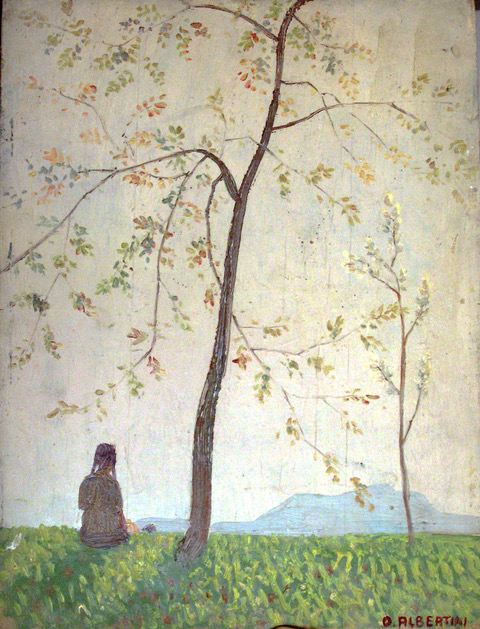
From childhood to adolescence, the micro-history of a boy (my uncle Alberto) inside the big history of a conflict that changed everyone’s lives. Now in his late eighties, Alberto goes back to his memories hoping to reshape untold stories, feeding the natural desire of expanding our sense of existence. The place is an Italian village — Besano — overlooking lake Lugano. Italian eyes and windows darkened by the conflict gazing across the lake toward neutral Switzerland where lights were not turned off. His family is my family before I came into the world, in 1945. An artist family. Oreste’s paintings (my grandfather) gave to our lives a flavor of turpentine and oil colors, and the odd strength of dreams in the after war fight for survival. Not long ago. (R.A.)

THERE ARE A GREAT MANY PEOPLE ALWAYS LIVING WHO ARE MIXED UP WITH ANYTHING AND THAT IS KNOWN AS EVENTS. (Gertrude Stein)

invwerno-sel-2a

May 23, 2008 3:30:30 PM       Can we still call it time? Not the weather, of course. What’s time? Our events go through it; and although accurate instruments measure the bits, it looks or is ungraspable, flexible, slippery to me. Perhaps we introduce events into the memory as we do with data in a computer, but the more they are engraved in us, or sorrowful, the bigger is the space that we make for them, so when we go over our past again, in those places whose events have deeply excavated our interior, our reading extends along with the image of the past time. 1940-1945. My adolescence, from thirteen to eighteen. A whole life in a few years because from childhood one moves to maturity, and becomes an adult. Five endless years, irreplaceable, enchanting and painfully consuming. Desires, hopes, clear sunsets, the sky swept by the wind in March, snow, cold, the partisans on the mountains, frozen soldiers in Russia, deported people. The war seemed never ending. But really, it was only our expanded life! Now that the Iraq war has entered the sixth year [2008], we didn’t even realize it, those six years disappeared for us, but what about people in Iraq? The years must have been endless for them, no hopes either. When older people from my village recalled facts that had happened ten or twenty years before, they seemed an eternity ago to me. And now that I can go back much further with my own memories, such eternity isn’t there anymore!

My generation grew up through fearful stories. Stories of living dead, witches, graveyard’s skeletons. That’s why I was scared of the dark and of the night, out of the house. I was seven-eight years old when “the little grandma” passed away. They showed her to me lying on the bed wearing a black dress, her body covered with a white transparent veil and surrounded by four lit candles at the corners of the bed. I was shocked. For years I was scared walking by that door in the night time. Such a deep interior perturbation — I believe— might have been the origin of a similarly deep religious crisis. I had become absolutely and deeply religious. There was maybe also another reason: I had fall in love with the sister of a school friend. Her blond, long hair were braided. Although she was five years older than I was, I was eight she was thirteen, I was convinced it was not an obstacle. On the pretext I was visiting her brother I glued myself to her so much that, because she was God-fearing, to be able to follow her I went to church morning and afternoon. The consequence was a disquieting fact. Taken by fervor, I started to follow processions, and one time I walked bearing a very heavy crucifix. The wood was heavy on my belly. My long pants, moreover, had become small and tight. At the time there was a cut in the front of the underpants, which was covered by pants! It was my clear sensation, instead, that my weeny was also out of my pants and everyone, since I was at the head of the procession, could see me in such embarrassing situation. I was not able to lower my hands to check it out for they were holding the crucifix, even less to look down. I went through an endless time of panic, until in the end I could reassure myself. That’s the limit that determined, later, a turning point.

6415-ALBERTO

espansa 002

espansa-001

autore sel-11

autore-sel-16


Alberto Kurosawa style


liliana001 copy

Per Francesco e Diego

Dall’infanzia all’adolescenza, la microstoria di una ragazzo (lo zio Alberto) nella grande storia di un conflitto che ha cambiato la vita di tutti. Avvicinandosi ai novant’anni, Alberto ripercorre le sue memorie sperando di dar forma a storie mai dette,  di colmare il desiderio naturale di espandere il senso dell’esistenza. Il posto è un paesino italiano — Besano — con  vista sul lago di Lugano. Occhi italiani e finestre oscurati dal conflitto contemplano la Svizzera neutrale dall’altra parte del lago, dove le luci sono sempre accese. La sua famiglia è la mia famiglia prima che venissi al mondo, nel 1945. La famiglia di un artista. I quadri di Oreste (il mio nonno, padre di Alberto) hanno imbevuto le nostre vite con gli odori della trementina e dei colori a olio; forse ci hanno dato la strana forza dei sogni nello sforzo per sopravvivere del dopoguerra. Non molto tempo fa. (R.A.)

Si può ancora dire tempo? Non quello atmosferico, s’intende. Che cos’è il tempo, quello che noi attraversiamo con i nostri eventi e mentre lo scadenziamo con degli strumenti di precisione esso ci pare, o è, inafferrabile, elastico, sdrucciolevole. Forse come in una memoria di computer si possono inserire dati, noi nella nostra memoria inseriamo eventi, e quanto più sono incisivi o dolenti, per noi, più gli riserviamo spazio, così che, quando ripercorriamo il passato, là dove gli avvenimenti hanno scavato profondamente nel nostro intimo, la lettura si prolunga e così anche la nostra immagine del tempo passato. Cinque anni durò la nostra guerra, 1940-1945. la mia adolescenza, dai tredici ai diciotto anni, il concentrato della vita perché dall’infanzia passi alla maturità, diventi adulto. Cinque anni interminabili, irripetibili, affascinanti e struggenti. I desideri, le speranze, i tramonti limpidi, il cielo terso dal vento di marzo, la neve, il freddo, i partigiani sulle montagne, i militari congelati in Russia, i deportati. La guerra sembrava non finire mai. In realtà era la vita espansa! Ora che la guerra in Iraq è entrata nel sesto anno, [2008] neppure ce ne siamo accorti, questi sei anni sono volati, per noi, ma per gli iracheni? Per loro devono essere interminabili e non hanno nemmeno le speranze. E quando i nostri vecchi rievocavano fatti risalenti a dieci o venti anni prima, a noi sembravano eternità. Invece ora che io posso andare indietro con le memorie molto di più, questa eternità non c’è più!

La mia generazione è cresciuta a storie di paura. Di morti viventi, di streghe, di scheletri al cimitero. Questo faceva si che avessi paura del buio e della notte, fuori. Avevo setto-otto anni quando morì la “nonna” e me la fecero vedere stesa sul letto vestita di nero coperta da un velo trasparente bianco e quattro candele accese agli angoli del letto. Lo shock fu forte. Per anni ebbi paura a passare davanti a quella porta di notte. Questo profondo sconvolgimento interiore credo sia stato la causa di una altrettanto profonda crisi mistica. Ero diventato assolutamente e profondamente religioso. Però forse c’era anche un altro motivo. Mi ero innamorato della sorella di un mio compagno di scuola. Aveva lunghe trecce bionde e cinque anni più di me, io otto e lei tredici, ma ero convinto che questo non fosse un ostacolo. Con la scusa di andare dal fratello mi incollavo a lei e, siccome era timorata di dio, io, per seguirla andavo in chiesa la mattina e il pomeriggio. Ne seguì un fatto inquietante. Nel mio fervore, seguivo anche le processioni e in un’occasione portai anche un pesante crocifisso. Questo mi pesava sulla pancia e per giunta portavo dei calzoni lunghi che erano diventati stretti. Allora si usavano le mutande con un taglio davanti, però sopra c’erano i calzoni! Invece la mia netta sensazione era che mi fosse uscito il pisellino anche dai calzoni e che tutti, ero intesta alla processione, mi vedessero in questa imbarazzante situazione. Io non potevo allungare la mani per controllare perché tenevo il crocifisso, né tanto meno abbassare lo sguardo per vedere. Ho passato un interminabile tempo di panico, finché poi ho potuto rassicurarmi. Questo è stato il limite che ha poi segnato la svolta.

inverno 010

Miss You Tooooooooth

JUDY DARRAGH and her tooooooooth from New Zealand

Her words:      A thought I have been having lately is to remove the word ‘contemporary’ from contemporary art … If we liberate the word, art becomes more about the now, the present. There is a need to locate art in some frame of time. I make things mainly from materials sourced from the heap our lives throw up.

To have success you need to have failure … failure is never planned and it comes with no trace of cynicism. I find I work best in a less thinking state that allows these mishaps and chances to happen – when looking for materials I let the objects find me. We are schooled not to make errors. We judge failure in amounts: too bright, too illustrative, too messy. The excessive is the preferred judgement of failure.*


JUDY DARRAGH, Miss You Tooooooooth, 2014 Photo: Sam Hartnett Courtesy of the Artist

JUDY DARRAGH, Miss You Tooooooooth, 2014
Photo: Sam Hartnett    Courtesy of the Artist


My words:       It’s a still life, and a relic or the way art mixes natural with cultural history. When life is painted, a symbolic form wraps ideas that surge from inexplicable needs, even Picasso throwing up colors that had filled his body to the top. But here, with Judy Darragh, the tooth is real. Ivory and enamel, root and shape like a bloody new born: separated from us, body parts look messy. As a part of Judy’s body, the tooth can only be missed and loved like the tube in the snowman longing for the stove, it was a story by Hans Christian Andersen.

Art changes with us as we live. “Visible reality, the facts of the world and of the human body, are much more full of subtle nuances, and are much more poetic than what imagination discovers.” (Garcia Lorca)

Yet, it’s imagination that gives them meaning. This artist is from New Zealand and lives in Auckland. She has a talent for making fun of the veneer of grandeur that still covers the real story of a dead empire:  British colonialism in a Maori island. Indirectly, she is contaminated by the Maori spirit. And I can’t pull out of my mind the idea that her tooth — such a belligerant tool mashing veggies and meat to help the stomach — placed like an alien on an anonymous island, is a relic of a history she has absorbed to the very bones, and is now in front of her, personal and impersonal. To bite the apple, Adam and Eve’s teeth drove them out of the paradise.

Judy Darragh, and her he and her it, are a factory of sweet punches and kisses on lips bursting out of the deadliest object one can imagine: plastic leaves, fake roses, synthetic stones. But a new life explodes from each piece, even a heart made out of fake stones can bleed, and a tooth dried up of her pulp and nerves replaces The Crown without masks. As it is.

JUDY DARRAGH, Visible Woman 1988 plastic (flowers, embryo), wooden heart, electric bulb on plastic torso Courtesy of the artist

JUDY DARRAGH, Visible Woman 1988
plastic (flowers, embryo), wooden heart, electric bulb on plastic torso
Courtesy of the artist


JUDY DARRAGH, Art can make you  2002  (video stills)  VHS video

JUDY DARRAGH, Art can make you 2002 (video stills) VHS video – Courtesy of the artist


*From an interview with Tessa Laird 2013